Simple Health With Dr. Patience ⭐⭐⭐⭐⭐
Welcome to Simple Health With Dr. Patience | Evidence-Based Health Education Made Simple
How a Medical Doctor Discovered the S.A.F.E. Baby Method™ That Helps Mothers Tell the Difference Between Normal Teething and Baby Warning Signs That Need Medical Attention Before It's Too Late

Every day, I walk into my pediatric ward and see the same heartbreaking scenario.
A mother rushes in with her baby—sometimes so severely dehydrated the child is almost unresponsive. Sometimes so anaemic the baby is barely functioning. And almost always, the mother says the same thing: "I thought it was just teething."
I've watched it happen hundreds of times.
A mother brings her feverish baby to the hospital. The baby has been vomiting for days. The stools are loose. The infant is listless, refusing feeds.
But it wasn't teething.
It was a severe infection. Acute gastroenteritis. Dehydration severe enough to cause organ stress. And in some cases, by the time these babies arrive, they're fighting for their lives.
I'm a medical doctor. I've been trained to diagnose. I've studied anatomy and pathology. But nothing prepared me for the weight of seeing preventable suffering—all because parents couldn't tell the difference between a normal developmental phase and a medical emergency.
The worst part? These mothers weren't negligent. They weren't uneducated. They were confused. They were told so many different things by so many different people that they simply didn't know what to trust.
That broke me.
Because in that moment, I realized something wasn't broken with these mothers. Something was broken with how medical information was being shared.
Drop everything you are doing now and listen to every word I'm about to say.
Medical education has been around for centuries. Mothers have been caring for babies for millennia. But for far too long, the knowledge was either locked behind university degrees or hidden in traditional practices that weren't properly explained.
Then came the internet.
And with it, a flood of conflicting information that left mothers more confused than ever.
Hi, my name is Dr. P. First thing you should know about me is that I'm not just an academic doctor sitting in an office. For the last several years, I've been on the front lines—in pediatric wards, in emergency rooms, in clinics across West Africa—watching real mothers navigate some of their most terrifying moments as parents.

I remember the exact moment everything changed for me.
It was a Tuesday morning in 2019. I was doing my rounds in the pediatric ward when I noticed something. A pattern.
A baby brought in on Monday for severe diarrhea—the mother thought it was teething. Another on Wednesday with a high fever and lethargy—"the pharmacist said it's just teething." A three-month-old with signs of dehydration that would have taken minutes to prevent, if only someone had explained what "danger signs" actually looked like.
And I realized: these weren't medical failures. These were communication failures.
The mothers weren't lacking intelligence or love. They were lacking one thing: clarity.
I started asking questions. What did these mothers know about teething before coming to the hospital? What information had they received? Who did they trust? Why did they wait so long before seeking help?
The answers devastated me.
That last one made my hands shake. A preventable crisis. If that mother had known the red flags, the escalation points, the moment when normal development becomes a medical emergency—her baby wouldn't have suffered.
I went home that day and did something I'd never done before. I sat down and tried to create a simple framework that would help mothers distinguish between normal teething and the warning signs that need medical attention.
Not a clinical textbook. Not a scary list designed to create panic. But a practical, simple guide that a tired, worried mother could reference when she felt unsure.
I failed the first time.
My initial draft was too technical. It used medical jargon. It was organized the way doctors think, not the way mothers think. I gave it to some mothers at the clinic to test, and they said: "Doctor, I understand you mean well, but I don't know what 'systemic symptoms' means. And this is 30 pages long. I'm exhausted. I need something simple."
I went back. Again. And again.
I started working with a medical educator to simplify the language. We created visual markers. We organized information in a way that made sense for someone in a panic at 3 AM, not for someone reading a medical journal. We added the stories—real stories from mothers who had been through these exact scenarios.
And then, I tested it on real mothers.
The first mother I shared it with came back the next week.
I sat down after she left my office and cried.
Not because I'm some hero. But because suddenly, the piece I had been missing became clear: mothers didn't need more information. They needed the right information, organized the right way, with permission to trust their instincts.
Word spread.
Other mothers started asking for the guide. Other doctors asked permission to share it with their patients. I began getting messages from women in Lagos, Port Harcourt, Kano, Accra, Nairobi, and even from diaspora communities in London, Houston, and Toronto.
Each story was similar but unique. Each mother had a moment when the S.A.F.E. method gave her the clarity she needed to make a decision. Some brought their babies in earlier. Some avoided unnecessary hospital visits because they could distinguish between normal teething and something that needed monitoring. All of them reported feeling more confident and less afraid.
One father sent me a voice note that I still listen to sometimes.
That's when I knew this wasn't just a guide. It was a tool that gave mothers permission to trust their own judgment.
And it needed to reach more people.
I kept getting requests from women asking if I would make the guide more widely available. Friends referred their friends. Clinic managers asked for printed copies. I realized I couldn't do this one-on-one anymore.
So I did something I had never done before in my medical career: I packaged everything—the full S.A.F.E. method, the step-by-step framework, the checklist, the detailed explanations of what different symptoms mean, the exact guidance on when to monitor versus when to seek medical care—into one simple, beautifully designed guide that any parent could access instantly.
I call it my most important work.
Introducing...
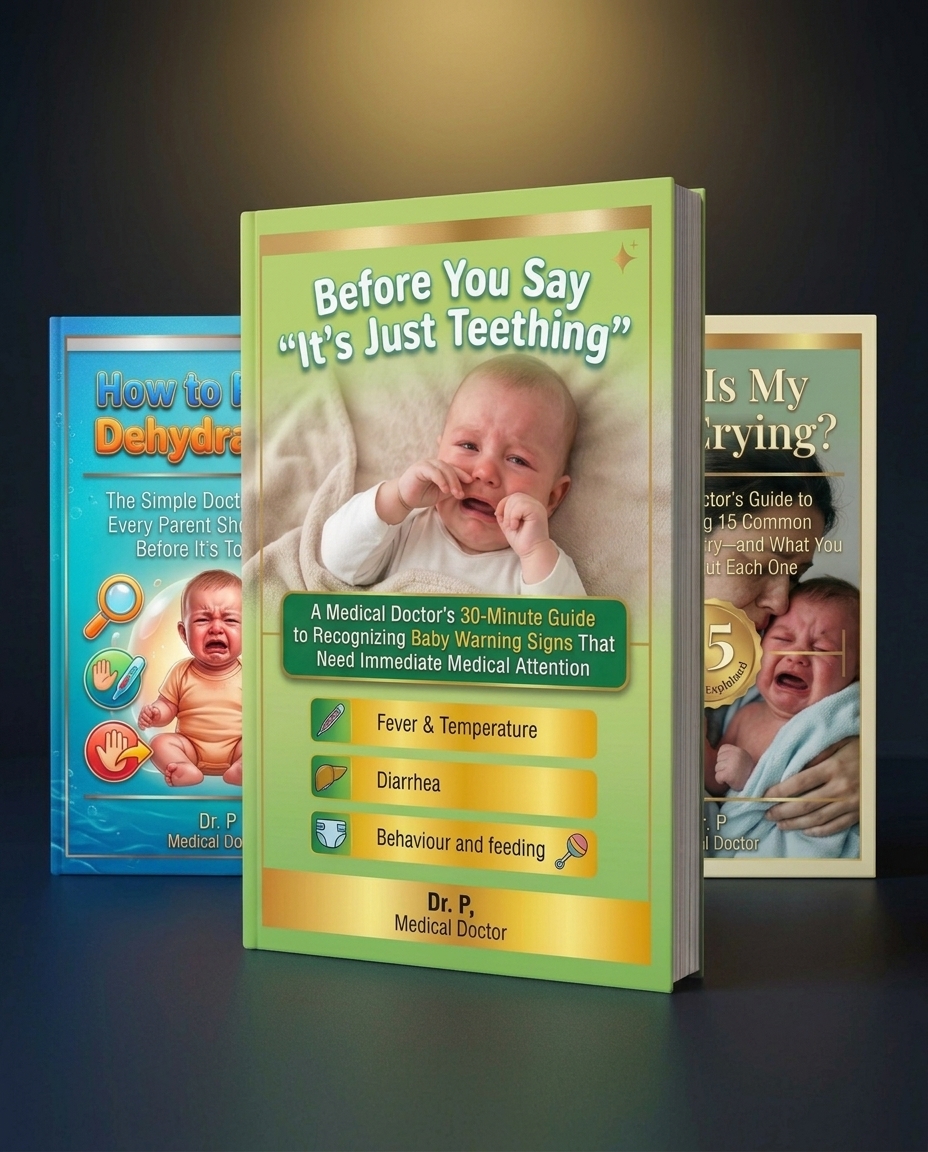
Inside This E-Guide, You'll Discover:
- What Teething Really Looks Like — Learn the normal signs of teething and the dangerous myths that put babies at risk. Page 8
- The Symptoms You Should Never Blame on Teething — Discover exactly which symptoms need a doctor's attention instead of being dismissed as "just teething." Page 18
- The S.A.F.E. Baby Method™ — A simple, proven 4-step framework to help you decide when to monitor your baby at home and when to seek medical care immediately. Page 35
- The Baby Warning Signs Checklist (Printable) — A quick-reference checklist every parent should keep on their phone or printed on their fridge. Page 48
- Fever, Diarrhea, Vomiting & Crying: What They Could Mean — Understand the most common baby symptoms and know exactly when it's time to see a doctor instead of assuming it's teething. Page 62
- When to Go to the Hospital Immediately — Learn the red flags that should never be ignored, even if you're not 100% sure something is wrong. Page 84
- Baby Emergency Red Flag Checklist — A one-page, phone-friendly printable checklist covering all the warning signs you need to know. Page 94
And the best part? You don't need to decipher medical jargon or spend hours on Google searches or call your doctor at 3 AM feeling embarrassed. It's the same simple method that transformed how I practice medicine and how mothers confidently care for their babies.
Real Mothers. Real Experiences.
Just So You Know...
Putting this Guide in an Easy-To-Read Format Cost Me Over ₦120,000
- Medical research and fact-checking with licensed pediatricians
- Professional copywriting to translate complex medical concepts into simple English
- Graphic design and layout to make the guide beautiful and scannable
- User testing with real mothers to ensure clarity and usefulness
- Website hosting and payment processing infrastructure
I could charge you the ₦120,000 I invested in creating this guide. But I'm not going to do that.
I won't even charge you ₦60,000—which would be a reasonable price for the time and expertise.
Not even ₦30,000—which is what many online guides cost.
A fair price for my work would be ₦15,000. That's what guides with similar value and scope cost in the African market.
But because I want every mother to have access to this life-changing information, I'm doing something different.
That's over 35% off.
WAIT! I Have FREE Gifts For You...
If you're among the first 20 people to take action today, you'll get these two amazing bonuses absolutely FREE alongside your main guide. (TODAY ONLY)
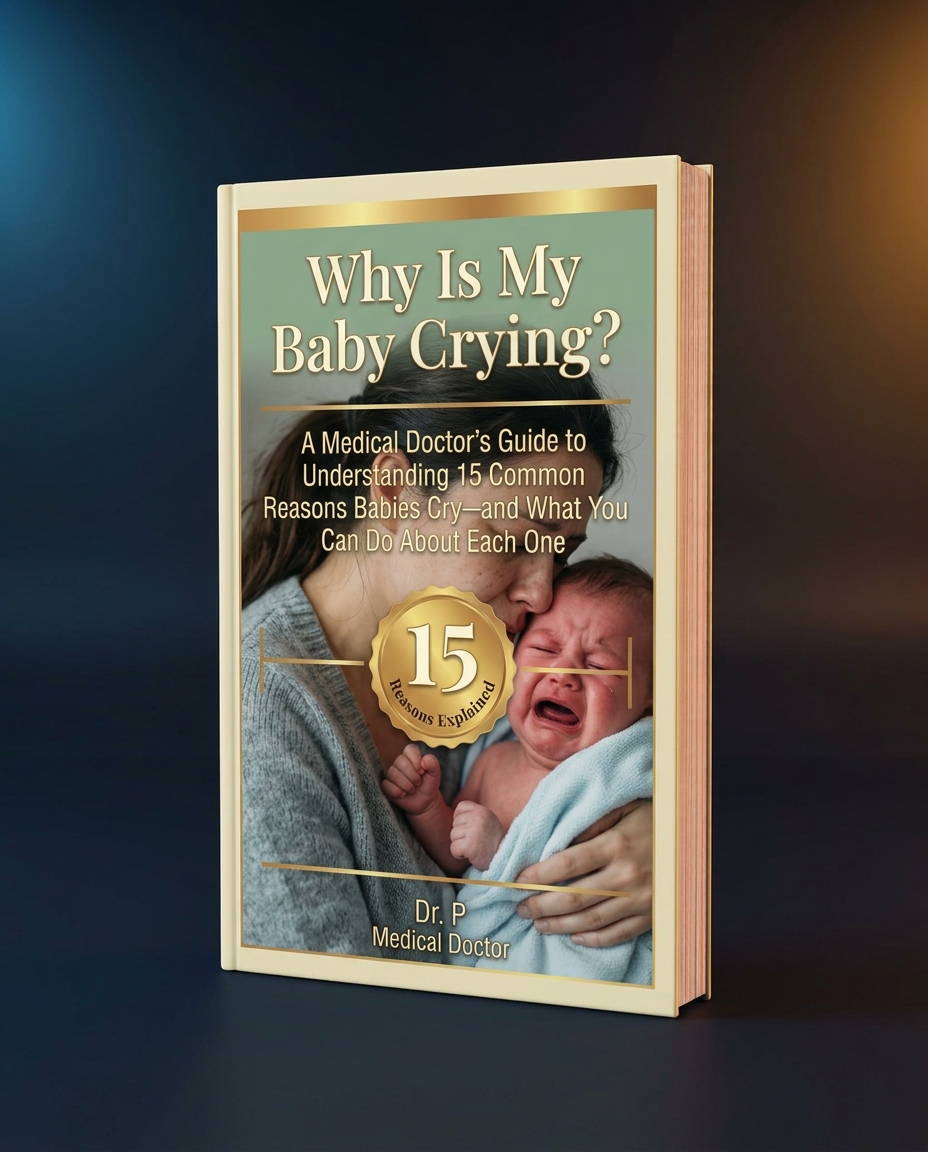
BONUS 1: Why Is My Baby Crying?
A Medical Doctor's Guide to Understanding 15 Common Reasons Babies Cry—and What You Can Do About Each One
Value: ₦3,500
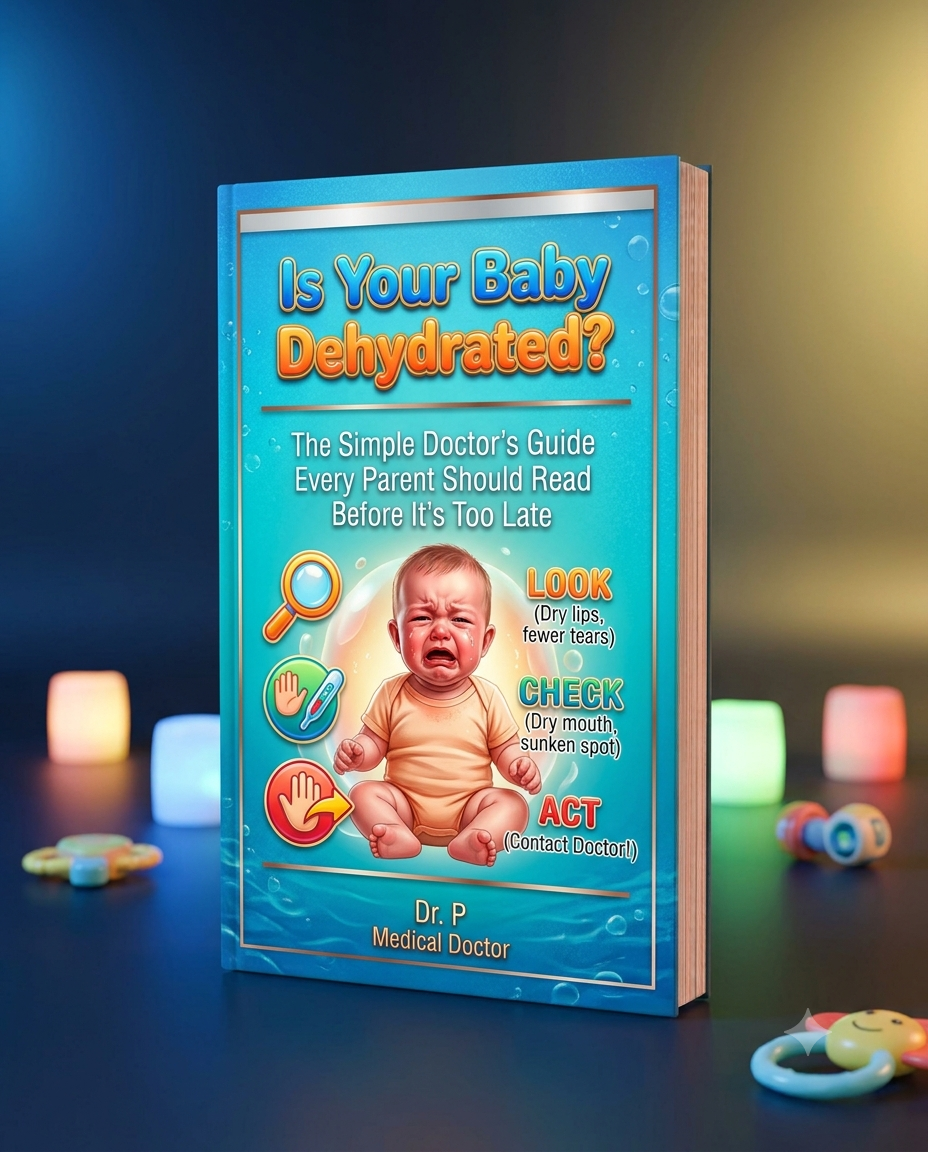
BONUS 2: How to Know If Your Baby Is Dehydrated
The Simple Doctor's Guide Every Parent Should Read Before It's Too Late
Value: ₦2,500
Complete Bundle Value: ₦21,000
Your Cost Today: ₦9,800 (with first 20 limit)
👥 Ebook Buyers (47 members)
Only 6 lucky people are left.
Remember: you're not the only one viewing this page right now.
Still Feeling Unsure? I Totally Understand.
Which is why I'm making you a bold, risk-free promise:
Get the complete guide. Read through it. Go through the S.A.F.E. method. Reference the checklists. Use it with your baby for the next 30 days.
If you don't feel more confident, clearer, and better equipped to know when your baby needs medical attention, I'll give you every naira back. No questions asked.
I'm not betting against you or your satisfaction. I'm betting on the fact that once you have this information organized clearly, your anxiety will drop and your confidence will skyrocket.
The only way you don't get value from this guide is if you never open it. And if that happens, you're not obligated to pay.
Take the Chance. Get the Guide Now.More Mothers. More Success Stories.
So Here's What Happens Next...
CHOICE 1:
You take action right now. You get the "Before You Say It's Just Teething" guide. You download it immediately. You read through the S.A.F.E. method. You save the checklists to your phone. When your baby shows signs of teething or illness, you have clarity instead of confusion. You make informed decisions. You sleep better knowing you can tell the difference between normal development and a warning sign.
CHOICE 2:
You close this page. You keep doing what you've been doing. You ask your mother, your mother-in-law, Facebook groups, and Google. You stay confused. You worry constantly. Maybe your baby gets seriously sick and you don't catch it fast enough because you couldn't tell what was normal and what was dangerous. Maybe you rush to the hospital for something mild and spend money unnecessarily. You stay anxious.
The clock is ticking. Only 6 spots left at this price.
You'll get instant access to download after payment. No waiting. No shipping. Just you and the guide, ready to go.
Share Your Experience